Exterior
Caring for Wood Siding, Logs, and Decks

Exterior wood is the part of a cottage that wears most visibly, and the reasons are consistent: water, ultraviolet light, and the freeze-thaw cycling that defines much of the Canadian year. Understanding how each one acts makes the maintenance obvious, because the work is mostly about managing moisture before it has a chance to do harm.
The three forces at work
Water
Wood absorbs and releases moisture with the weather. Repeated wetting and drying raises the grain, opens checks, and creates the damp conditions that rot and mildew need. Wood that cannot dry — shaded, ground-contact, or trapped behind debris — is where decay starts.
Sunlight
Ultraviolet light breaks down lignin, the compound that binds wood fibres. Unprotected wood greys and roughens at the surface; this is cosmetic at first but eventually lets water in more easily.
Freeze-thaw
When absorbed water freezes, it expands within the wood and within any finish on top of it. Over many cycles this loosens coatings and widens the small cracks that let in more water — a self-reinforcing loop that a sound finish is meant to interrupt.
A quick test
To judge whether a finish is still working, splash a little water on the surface. If it beads, the coating is repelling water. If it soaks in and darkens the wood, the surface is due for cleaning and re-coating.
Log walls
Log construction has its own vocabulary and failure points. The two recurring tasks are the finish on the logs themselves and the chinking or sealant between them.
- Checking. Long cracks that open along the grain as logs dry are normal, but upward-facing checks collect water and deserve attention.
- Sealant joints. The flexible material between logs moves with seasonal swelling and shrinking. Gaps or pulled-away sections are entry points for water and insects.
- Sun exposure. South- and west-facing walls weather fastest and usually need re-coating sooner than the rest of the building.
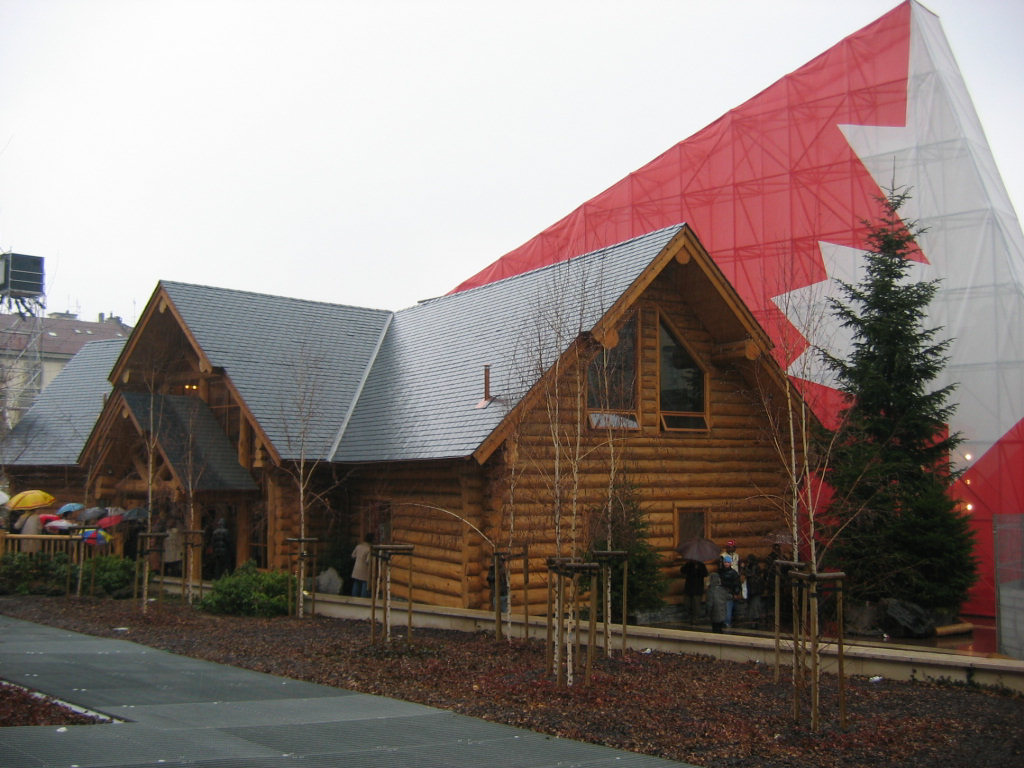
Decks
A deck is the hardest-working wood on most properties: flat surfaces hold water, the boards take direct sun, and the structure is often close to the ground where it stays damp. A seasonal routine keeps it sound.
- Sweep debris out of the gaps between boards; trapped leaves hold moisture against the wood.
- Clean the surface before re-coating so the finish bonds to wood rather than grime.
- Probe a few suspect spots — near the ground, under planters, at the base of posts — with a screwdriver. Wood that gives easily is decaying and needs a closer look.
- Check the fasteners and connections. On a raised deck, the connection to the building and the railing are structural; loose or corroded hardware is a safety issue, not a cosmetic one.
Choosing a finish
Exterior wood finishes trade off appearance against maintenance interval, and the right choice depends on exposure and how often you are willing to re-coat.
| Type | Character | Trade-off |
|---|---|---|
| Penetrating oil / semi-transparent stain | Soaks in, shows the grain | Shorter interval; easy to refresh without stripping |
| Film-forming stain or paint | Sits on the surface, hides grain | Longer interval; harder to repair once it peels |
| Left bare | Weathers to grey | No coating upkeep, but less protection from water and UV |
Whatever the choice, surface preparation and dry weather during application matter more than the product. Re-coating over a damp or dirty surface is the most common reason a finish fails early.
This refinishing work belongs to the summer window in the seasonal maintenance calendar. For the cold-season concerns that follow, see winterizing a seasonal cottage.